
On-Page SEO: The Complete Optimization Guide
Everything that lives on your own page and shapes whether it ranks: content, headings, links, URLs, images, and metadata. Here is what matters and how to get it right.
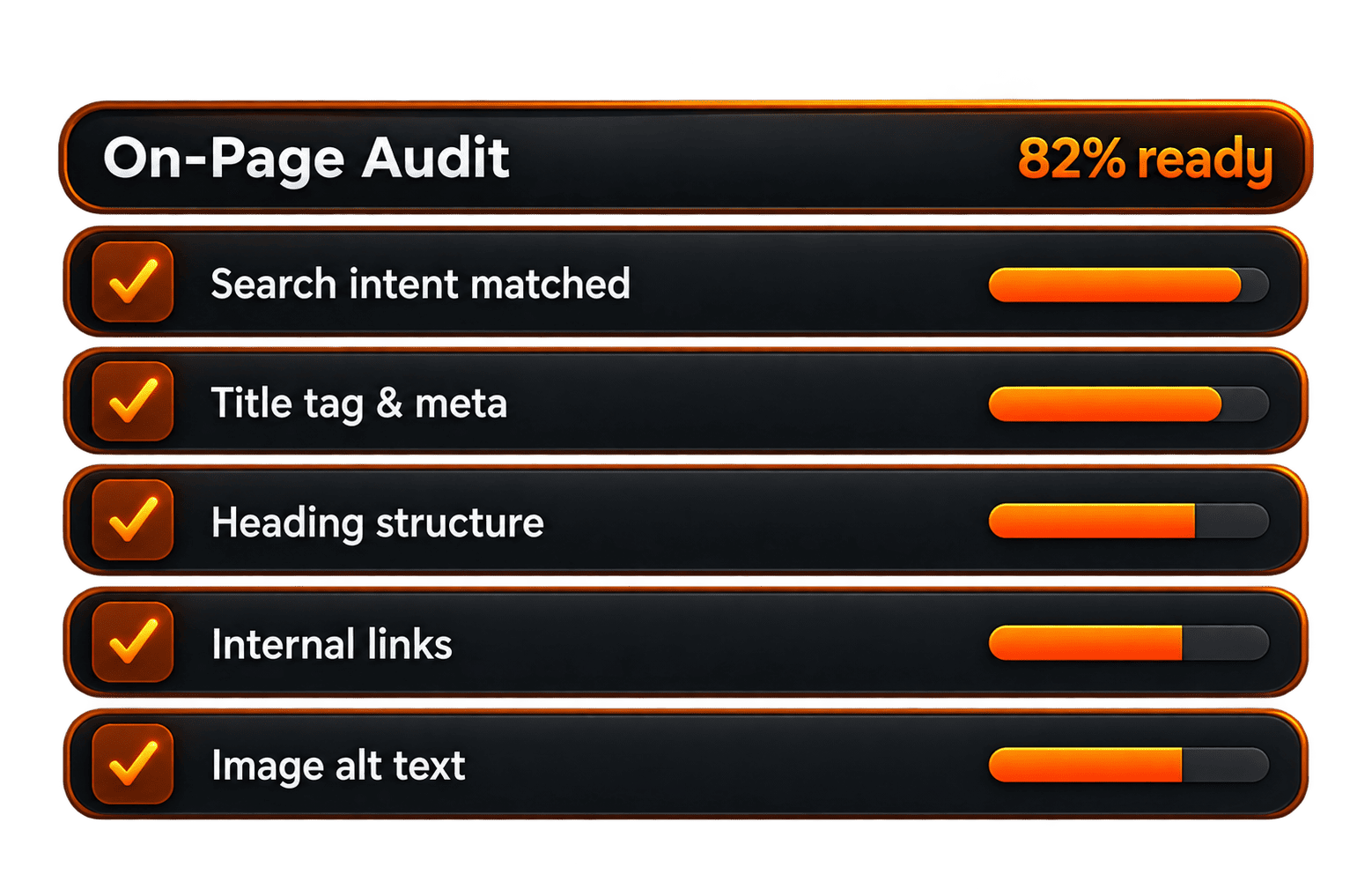
What Is On-Page SEO?
On-page SEO is the work of optimizing everything on a single webpage so search engines and people understand it and find it useful. That covers the content, headings, title tag, meta description, URL, internal links, and images, all working together toward one clear topic.
It is broader than adding keywords. Repeating a phrase does not make a page rank. On-page optimization is about matching what a searcher wants, structuring the page clearly, and making it genuinely helpful, so the right people stay and act.
On-page SEO differs from off-page SEO. On-page covers what you control on your own site. Off-page covers signals from elsewhere, mainly backlinks and brand mentions. A simple example: writing a clear, well-structured page about “custom hoodies” is on-page work; earning a link to that page from a local news site is off-page work.
In short: on-page SEO makes a page clear, relevant, and useful for one search topic. It is the foundation the rest of your SEO builds on.
On-Page SEO Factors That Actually Matter
These are the parts SEO professionals check when optimizing a page. Each one is a lever, and they work best together.
On-Page SEO Checklist
Run any page through these four groups before and after you publish. It keeps the optimization practical instead of guesswork.
01
Before Publishing
- Search intent identified
- Primary keyword selected
- Supporting topics researched
- Page purpose defined
02
Content
- Helpful introduction
- Logical heading structure
- Original information
- Clear, complete answers
03
SEO Elements
- SEO title and meta description
- Clean URL and single H1
- Image alt text
- Relevant internal links
04
User Experience
- Readable paragraphs
- Clear navigation
- Useful visuals
- Mobile-friendly, clear CTA
When Professional SEO Support Helps
You can handle plenty of on-page work yourself. Professional support makes sense when the site is large, the market is competitive, or the technical side gets complex.
- Large websites with many pages to coordinate
- Competitive industries that need real strategy
- Website migrations where mistakes cost rankings
- Persistent organic traffic problems
- Technical complexity beyond your team
- Limited internal time or resources
- A need for a structured, ongoing SEO plan
- Reporting that ties SEO to real outcomes
How Markro Digital Supports Your SEO
Markro Digital’s search engine optimization work covers the areas this guide walks through: SEO strategy, content optimization, technical improvements, keyword research, website structure, and internal linking, handled as ongoing work rather than a one-time fix.
We do not promise guaranteed rankings, traffic, or revenue, because no honest provider can. Results depend on competition, search demand, your website, and the quality of the work. You can see examples in our portfolio, learn who we are on our about page, or view our full range of services.
Priorities Shift by Site, and Technical Health Supports It All
The same principles apply everywhere, but the emphasis changes with the type of website.
A few technical elements support on-page work without being purely content: mobile usability, page speed and Core Web Vitals, indexability, canonicalization, and structured data where it fits. These are closer to technical SEO, so treat them as the foundation your on-page content sits on, not as on-page factors themselves. Your content management system setup often decides how easily you can control them.
On-Page SEO: Common Questions
Have questions about Markro Digital’s services or how we execute projects? Here are answers to the most common questions we receive. If you need more customized information, feel free to reach out.
01. What is on-page SEO?
On-page SEO is optimizing everything on a single webpage so search engines and people understand it and find it useful. It covers content, headings, title tags, meta descriptions, URLs, internal links, and images, all focused on one clear topic and the search intent behind it.
02. Why is on-page SEO important?
Search engines can only rank what they understand. On-page work makes your topic and relevance clear, improves the experience for real visitors, and gives your page a fair chance to rank. It is the foundation the rest of your SEO builds on, and it is fully in your control.
03. What are the main on-page SEO factors?
The main factors are search intent, content quality, keyword placement, title tags, meta descriptions, heading structure, URLs, internal links, image optimization, and readable formatting. None ranks a page alone; they work together to make the page clear, relevant, and useful.
04. Does keyword density matter for SEO?
No. Chasing a keyword density percentage is an outdated practice. Modern search engines focus on relevance, search intent, and usefulness. Use your main term and natural variations where they fit, and write for the reader instead of a target number.
05. What is the difference between on-page and off-page SEO?
On-page SEO covers what you control on your own site: content, structure, metadata, internal links, URLs, and images. Off-page SEO covers signals from elsewhere, mainly backlinks and brand mentions. Both feed a broader strategy, and on-page is usually where you start.
06. How often should webpages be optimized?
There is no fixed schedule. Review important pages when rankings slip, when the information goes out of date, or when search intent shifts. Many teams revisit key pages a couple of times a year and update as needed, rather than optimizing everything on a rigid timetable.
07. Can I do on-page SEO myself?
Yes, for the basics. You can match search intent, write clear titles and headings, add internal links, and improve readability without special tools. Deeper technical work, large sites, and competitive markets are where professional help usually pays off.