Technical SEO: Site Audit and Fixes
The behind-the-scenes health that lets search engines crawl, understand, and rank your site. Here is what a technical audit checks, which issues matter, and how to fix them in the right order.
What Is Technical SEO?
Technical SEO is the work of making a website easy for search engines to crawl, index, and understand. It covers site speed, mobile usability, crawlability, indexing, site structure, security, and structured data, the foundation your content sits on.
Two ideas sit at the center: crawling and indexing. Crawling is when search engine bots discover your pages by following links. Indexing is when the engine stores and organizes what those pages are about. If a page cannot be crawled or indexed, it cannot rank, no matter how good the content is.
Technical SEO does not replace quality content or search intent. It makes sure the content you have can actually be found, loaded quickly, and read cleanly across devices. In a full SEO strategy, it is the layer everything else depends on.
In short: Technical SEO clears the path so search engines can reach, understand, and trust your pages. Get it wrong and even great content stays invisible.
Why It Matters
Why Technical Health Matters
Search engines can only rank what they can reach and understand. Technical problems quietly cap your visibility by blocking crawling, slowing pages, or confusing what should rank.
Off-Page SEO
Backlinks
Link quality
Authority
Trust
Rankings
Fixing technical issues does not guarantee higher rankings on its own. It removes the barriers that hold good content back and improves the experience for real visitors. Google’s SEO starter guide treats this foundation as a starting point, not an afterthought.
The Audit
Technical SEO Audit: What It Includes
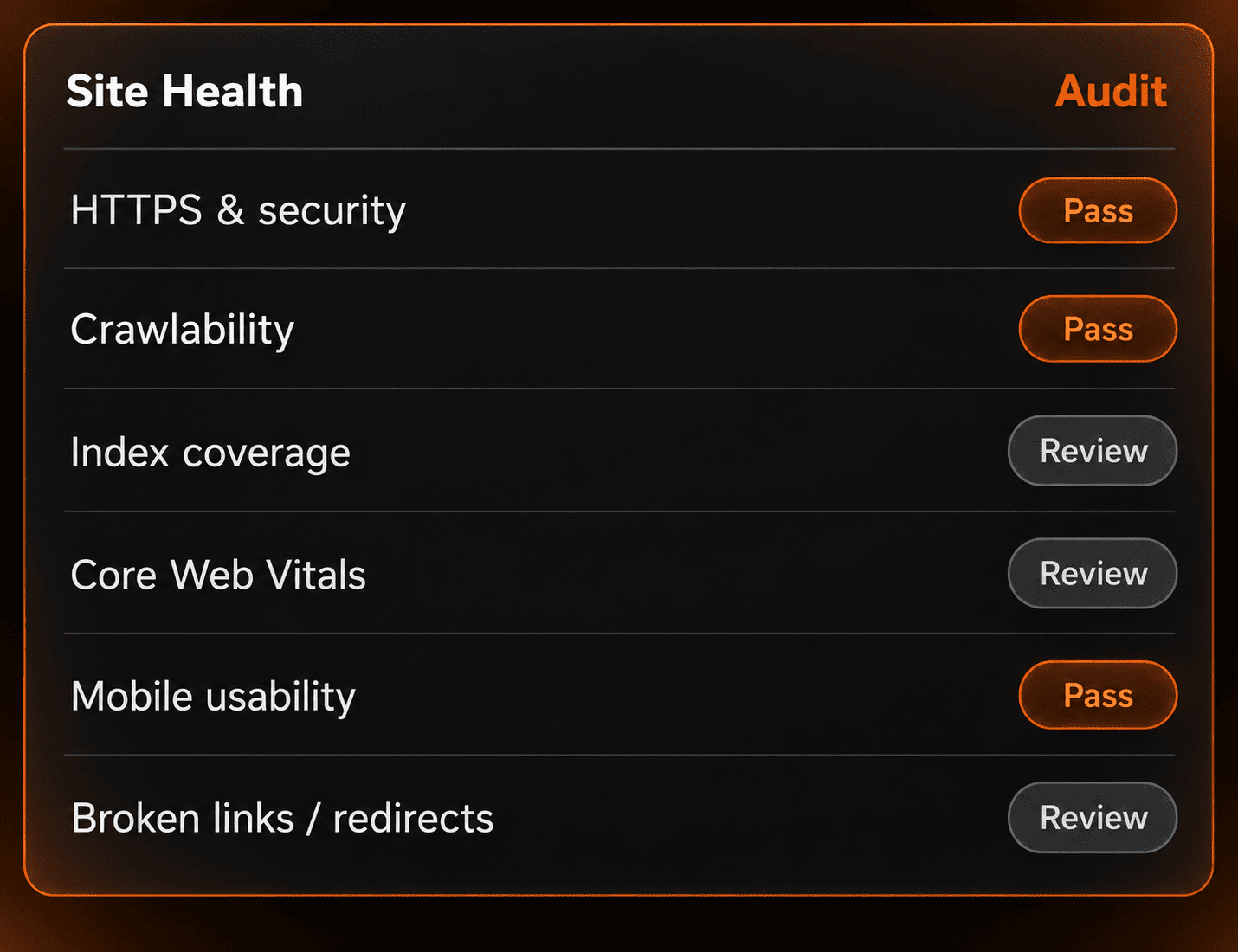
A technical SEO audit reviews the systems that affect whether your pages get found and understood. A good one does not just dump a list of warnings. It identifies issues, prioritizes them by real impact, and documents the fix.
The audit process
1
Crawl
2
Diagnose
3
Prioritize
4
Fix
5
Validate
6
Validate
The Core
Crawlability and Indexing
Crawlability is whether search engine bots can reach your pages. Indexability is whether a reachable page is eligible to be stored and shown in results. A page can be crawlable but not indexable, or neither.
- Robots.txt rules blocking important pages
- Accidental noindex directives
- Weak internal linking or orphan pages with no links in
- Incorrect canonical tags pointing away from the real page
- Redirect chains that waste crawl budget
- Large numbers of low-value URLs diluting attention
The fix usually starts in Google Search Console, where the index coverage report shows which pages are indexed, excluded, or erroring, and why.
The Technical Elements That Support Everything
These pieces work together to make your site accessible, fast, and clear to both search engines and people.
Page Experience
Core Web Vitals and Page Speed
Core Web Vitals are Google’s measures of real-world page experience. They focus on three things a visitor actually feels.
Better scores improve the experience and remove a possible drag on visibility. Speed alone does not guarantee higher rankings, so treat it as one factor among many, not a magic lever.
Diagnosis
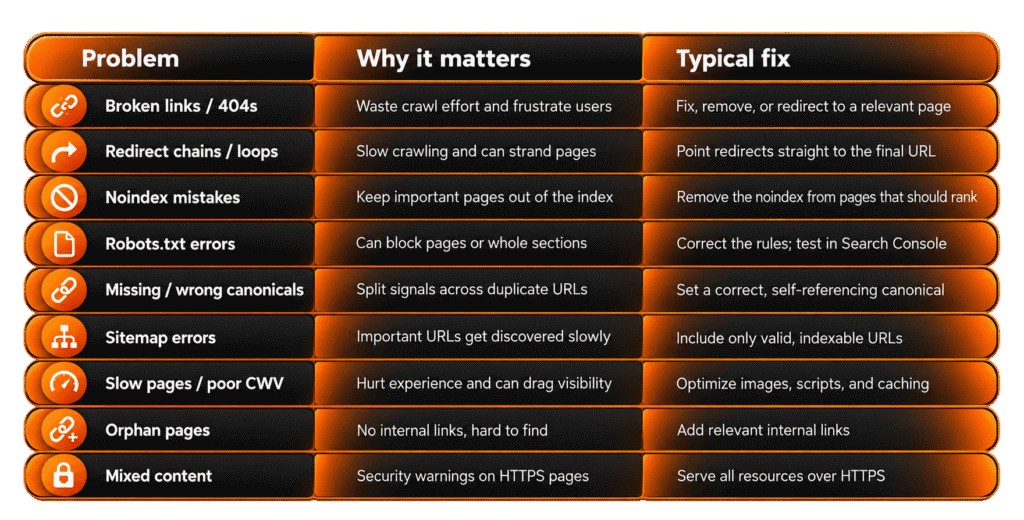
Common Technical SEO Issues and Fixes
Most audits surface the same recurring problems. Here is what each one means and the typical fix.
Use This
Technical SEO Checklist
Run your site through these before and after any fixes. It keeps the work grounded in what actually affects visibility.
- HTTPS working correctly, no mixed content
- Important pages crawlable and indexable
- XML sitemap valid and submitted
- Robots.txt configured correctly
- Canonical tags reviewed
- Broken links and 404s checked
- Redirects reviewed, no chains or loops
- Site architecture and internal linking reviewed
- Orphan pages identified
- Core Web Vitals reviewed
- Mobile usability checked
- Structured data reviewed
- URL structure clean and consistent
- Duplicate content checked
- JavaScript rendering reviewed where relevant
- Search Console index coverage reviewed
Getting Help
When to Consider Professional Technical SEO
You can handle plenty of technical checks yourself. Professional support pays off when the stakes or the complexity rise.
- Website migrations or redesigns
- Large or e-commerce sites with many URLs
- Persistent indexing or crawl problems
- Poor performance or weak Core Web Vitals
- Complex JavaScript-heavy websites
- International sites with hreflang needs
- A sudden drop in traffic or visibility
- Limited internal technical SEO expertise
How Markro Digital Supports Your SEO
Markro Digital’s search engine optimization work includes technical SEO audits, website SEO analysis, on-page SEO, technical issue identification, performance recommendations, and ongoing support, handled as steady work rather than a one-time cleanup. It fits within our wider digital marketing services.
We do not promise guaranteed rankings, because fixing technical issues clears the path but does not force a result. Outcomes depend on competition, content, and your site. See examples in our portfolio, meet the team on our about page, or view the full range of services.
Off-Page SEO: Common Questions
Have questions about Markro Digital’s services or how we execute projects? Here are answers to the most common questions we receive. If you need more customized information, feel free to reach out.
01. What is Technical SEO?
Technical SEO is the work of making a website easy for search engines to crawl, index, and understand. It covers crawlability, indexing, site speed, mobile usability, structure, security, and structured data. It is the foundation that lets your content be found and read, and it works alongside on-page and off-page SEO.
02. What does a Technical SEO audit include?
A technical SEO audit reviews crawlability, indexability, XML sitemap, robots.txt, canonical tags, redirects, broken links, duplicate content, site architecture, internal linking, page speed, Core Web Vitals, mobile usability, HTTPS, and structured data. A good audit prioritizes issues by real impact and documents the fix, rather than listing every warning.
03. Why is Technical SEO important?
Search engines can only rank what they can reach and understand. Technical problems can block crawling, slow pages, or confuse what should rank, quietly capping your visibility. Fixing them removes those barriers and improves the experience for real visitors. It does not replace good content, but good content needs it to perform.
04. What is the difference between Technical SEO and on-page SEO?
On-page SEO covers the content and elements on a page: text, headings, titles, and internal links. Technical SEO covers the site-wide systems that let search engines access and process those pages: crawling, indexing, speed, structure, and security. They overlap, and both are needed for a page to rank.
05. How do you fix indexing problems?
Start in Google Search Console’s index coverage report to see which pages are excluded and why. Common fixes include removing accidental noindex tags, correcting robots.txt rules, fixing canonical tags, improving internal links to orphan pages, and cleaning up redirect chains. Then request re-indexing and monitor the report.
06. Do Core Web Vitals affect SEO?
They are part of page experience and can influence visibility, especially between otherwise similar pages. Better loading, responsiveness, and visual stability improve the experience for visitors. Strong Core Web Vitals alone do not guarantee higher rankings, so treat them as one factor within a broader strategy.
07. How often should a website have a Technical SEO audit?
There is no fixed schedule. Many sites benefit from a full technical audit once or twice a year, plus a check after any migration, redesign, or major traffic change. Larger or fast-changing sites often monitor Search Console and performance more regularly to catch issues early.
08. Can Technical SEO improve website performance?
Yes. Much of technical SEO overlaps with performance: faster load times, better Core Web Vitals, cleaner code, and mobile usability all improve the experience for visitors as well as search engines. The gains help users and search visibility at the same time, though results still depend on the wider strategy.