
What Is Content Marketing?
A Content Marketing Strategy Guide
A content marketing strategy turns the things your customers already want to know into search visibility, trust, and real business opportunities. It decides who you’re writing for, what each piece needs to do, where it gets seen, and how you’ll know it worked.

What is a content marketing strategy?
Most Businesses Have a Direction Problem
Most businesses don’t have a content problem. They have a direction problem.
The blog has forty posts, the social feeds stay active, and someone recorded a few videos last quarter. Traffic barely moves and the sales team still answers the same basic questions on every call. Publishing without a plan produces activity, not results.
What changes the picture is connecting each piece to a chain. This guide walks through each link with practical examples.

What Is Content Marketing?
Content marketing is attracting and helping customers with useful information instead of interrupting them with ads.
You publish articles, guides, videos, emails, and other material that answers real questions. Over time, that content earns attention, builds trust, and brings people back when they’re ready to buy.
Good content works across the whole buying process. An explainer builds awareness, a comparison guide helps someone weigh options, and a detailed service page with FAQs supports the final decision. Consistency matters because trust builds through repeated useful encounters, not a single viral post.
What Is a Content Marketing Strategy?
A strategy is the plan that decides what content gets made, for whom, and why, before anyone writes a word. Without it, content creation turns into a list of topics someone thought sounded interesting.
Content creation
Producing a blog post, video, or email.
Content strategy
The system that decides which post to write, who it’s for, where it goes, and what success looks like.
Creation without strategy is busy work. Strategy without creation is a document nobody uses.
- Business objectives: what the content needs to support
- Audience research: who you serve and what they care about
- Customer pain points that push people to search
- Keyword research: the words people use
- Search intent: what the searcher wants
- Content topics you'll own
- Content formats chosen for fit
- Distribution channels where content gets seen
- Conversion paths: the next step for each piece
- Measurement and optimization over time
Keyword Research and Search Intent
Keyword research shows the words people use; search intent shows what they want when they use them. Both shape an SEO content strategy, but intent decides the format and angle.
Informational
how does content marketing workCalls for an explainer.
Commercial investigation
best email tools for small business
Transactional
hire content writerCalls for a service page with clear next steps.
Navigational
markro digital blogCalls for the exact page named.Long-tail keywords, such as “content calendar template for a law firm,” show lower volume but sharper intent. Related searches reveal the sub-topics a complete answer needs. Group related keywords into topic clusters rather than writing a thin page for each variation.
Google’s guidance on creating helpful, people-first content makes the same point: write for the reader first and apply SEO to that content. Our overview of search engine optimization covers how content fits with the technical and authority sides of SEO.
Content Pillars and Topic Clusters
Topic clusters organize content around a few core themes so readers and search engines see depth, not scattered posts.
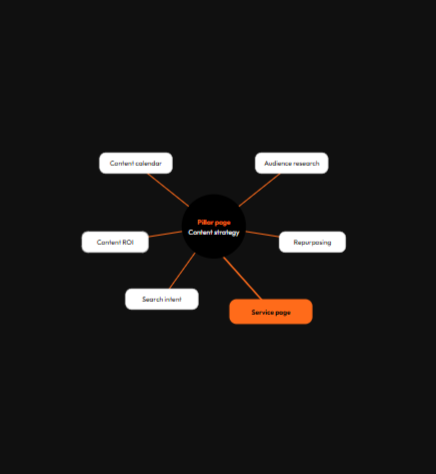
A pillar page covers a broad topic, the way this page covers content strategy as a whole. Supporting articles go deep on sub-topics such as building a content calendar or measuring content ROI. Internal links connect each supporting article to the pillar and to each other, then point readers to the relevant service page.
Map each article to one primary intent before writing so two posts don’t target the same query. Clean on-page SEO and internal linking hold the whole cluster together.
Frequently Asked Questions
Have questions about Markro Digital’s services or how we execute projects? Here are answers to the most common questions we receive. If you need more customized information, feel free to reach out.
01. What is a content marketing strategy?
It’s a plan for creating and sharing useful content that attracts a specific audience and moves them toward a business goal. It defines the audience, topics, formats, channels, conversion paths, and metrics.
02. What is the difference between content marketing and content strategy?
Content strategy sets the direction: goals, audience, topics, and priorities. Content marketing carries it out by producing, publishing, and promoting the content. Strategy decides what to make; marketing makes and shares it.
03. Why is content marketing important for SEO?
Search engines rank pages, and content creates the pages that answer searches. Helpful content also earns links and gives you internal linking opportunities, both of which support organic visibility.
04. What are the main types of content marketing?
Common types include blog posts, long-form guides, case studies, videos, infographics, ebooks, white papers, FAQs, email content, social media content, landing pages, tutorials, and original research. Choose formats your audience uses and your team can produce well.
05. How do I create a content marketing strategy?
Start with a business goal and a clear audience. Research their questions and searches, choose a few core topics, map content to the buying journey, plan distribution, and set metrics. A content marketing strategy works when you review results regularly and adjust.
06. How does keyword research fit into content marketing?
Keyword research shows the language people use when they search, and search intent shows what they expect to find. Together they shape topics, formats, and page structure so content matches real demand.
07.How often should a business publish content?
As often as it can while keeping quality high, at a pace it can sustain. For many small businesses, that’s one or two strong pieces a month plus updates to existing content.
08. How do you measure content marketing success?
Track visibility in Search Console, traffic and engagement in analytics, and conversions such as forms and calls. Then connect content to qualified leads and customers using UTM tags and CRM data.
09. What is a content marketing funnel?
It’s a way of matching content to buying stages: awareness content explains problems, consideration content compares options, decision content supports the purchase, and retention content helps existing customers.
10. When should a business hire a content marketing agency?
Consider outside help when content lacks direction, traffic has stalled, content isn’t producing leads, or your team doesn’t have the time or skills for research, SEO, and measurement.