
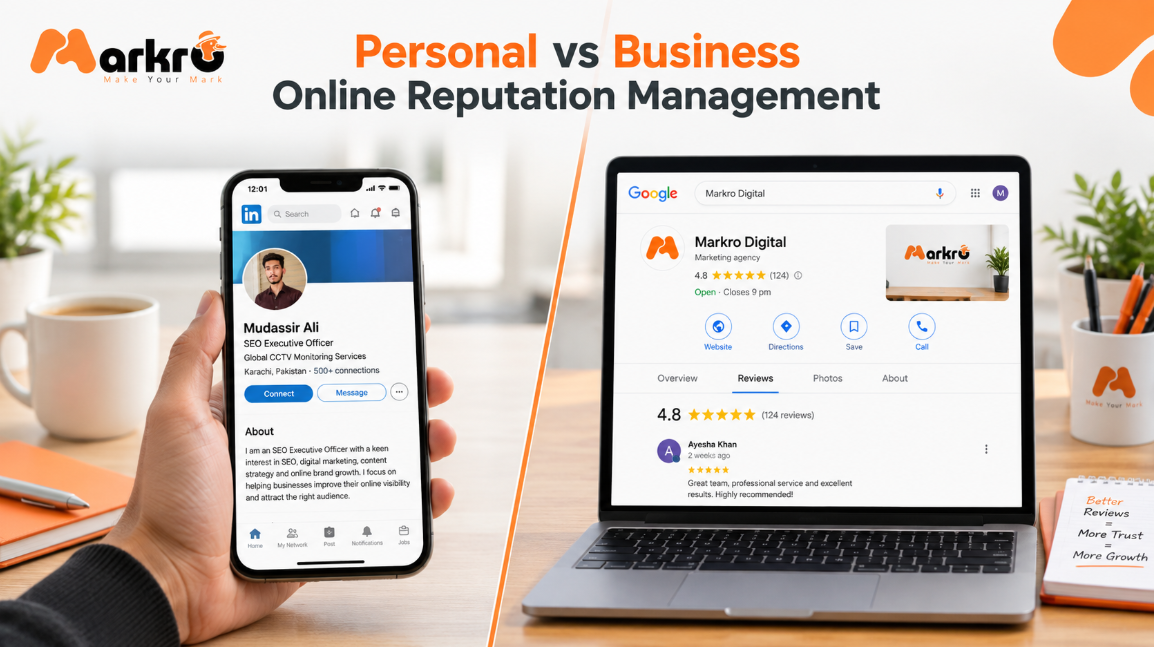
How Personal and Business Reputation Management Diverge
A small business owner’s name and her company’s name were nearly identical. When a personal dispute from years earlier surfaced in a local news story, it showed up on the first page of results for both searches, hers and the business’s. She had built a strong brand reputation management routine for the company. She had never once thought about her own name.
That overlap is common, and it’s exactly where personal and business online reputation management stop being interchangeable. They share the same underlying tools and monitoring principles, but the stakes, the content strategy, and what counts as a fix are genuinely different between the two.
This guide breaks down where personal online reputation management and brand reputation management diverge, and why a business owner often needs to manage both at once.
TL;DR: Personal online reputation management focuses on an individual’s name and public image, while brand reputation management protects a company’s identity across search results and review platforms. The two connect closely for small business owners and executives, since a personal issue can surface alongside the business in search results. Business reputation repair typically has clearer, more visible signals (reviews, ratings) to work with than personal reputation repair does. Markro Digital manages both when a client’s personal and business presence are closely tied together.
What Separates Personal From Business Reputation Management
Personal online reputation management protects how an individual’s name appears in search results and across social platforms, while brand reputation management protects a company’s collective identity, its reviews, its press coverage, and its overall search presence. The core monitoring tools overlap, but what counts as success looks different for each.
A business can improve its reputation by earning more positive reviews and responding consistently to negative ones. An individual doesn’t have a review platform working in their favor the same way, which makes personal reputation repair a slower, more content-driven process by comparison.
Online Brand Image vs Personal Public Image
Online brand image is built from reviews, press mentions, social media presence, and the consistency of a company’s messaging across every platform it appears on. A personal public image is built more narrowly, from what appears when someone searches a name directly: news coverage, social profiles, and any public record that surfaces.
Where the Two Overlap for Business Owners
- A business owner’s personal social media activity often reflects directly on the company
- Local news coverage of an individual can rank alongside searches for their business
- A founder’s public statements or history can become inseparable from brand reputation management
- Executive reputation issues at larger companies tend to affect stock perception and customer trust simultaneously
Pro tip: Search both the business name and the owner’s personal name in the same incognito session. What ranks for one often bleeds into results for the other, especially for small, name-recognizable businesses.
Google Reputation Management: Different Stakes for Each
Google reputation management for a business centers heavily on the local pack, review ratings, and the Google Business Profile itself. HubSpot’s guide to online reputation management notes that business search results are shaped by structured data Google actively displays, star ratings, review counts, and hours, that don’t exist the same way for personal name searches.
For an individual, Google reputation management is closer to traditional search result management: monitoring what content ranks, building out accurate personal content (a professional profile, published work, legitimate press), and addressing outdated or incorrect information where possible.
Business Reputation Repair vs Personal Reputation Repair
Business reputation repair usually has a clearer playbook: respond to negative reviews, request new ones from satisfied customers, and publish fresh content tied to the business. The signals are measurable, review counts, star ratings, and response rates all move in a visible direction.
Why Personal Reputation Repair Moves Slower
Personal reputation repair depends more heavily on what content exists to rank in the first place. Without a review platform generating fresh positive signals automatically, an individual typically needs published articles, professional profiles, or public speaking history to outrank an unwanted result. Sprout Social’s insights on online reputation management point out that this content-building process for individuals often takes longer than review-driven business repair, since there’s no built-in mechanism generating new positive material.
When a Business Owner Needs Both Strategies at Once
Small business owners, consultants, and executives whose personal name is closely tied to their company usually need personal and business reputation management running together, not as separate, disconnected efforts. A negative personal story can undercut a strong brand reputation management effort if it ranks high enough to be one of the first things a potential customer sees.
The same monitoring habits apply to both: checking search results regularly, tracking mentions, and responding to what surfaces before it gains traction. What changes is the type of content used to build a stronger reputation. A business leans on reviews and service pages; an individual leans on professional content and legitimate press.
Markro Digital handles this overlap directly when a client’s personal and business identity are closely linked, building out online reputation management services that account for both. For the tools and monitoring workflow behind either strategy, see Markro Digital’s guide to ORM strategy and reputation management tools. Get a free call to talk through a specific situation, or see the portfolio for documented results.
Author: Mudassir Ali writes on reputation strategy across personal and business contexts for Markro Digital, helping owners and executives manage both together.
Frequently Asked Questions: Personal vs Business Reputation Management
Is online reputation management different for individuals than for businesses?
Yes. Business reputation management relies heavily on reviews and structured search features like the local pack. Personal reputation management depends more on published content and press, since individuals don’t have a review platform generating signals the same way.
Can a business owner’s personal reputation affect their company?
Yes, especially for small businesses where the owner’s name is closely tied to the brand. A personal news story or public dispute can rank alongside business searches and influence how potential customers view the company.
Which is harder to repair, personal or business reputation?
Personal reputation repair is typically slower, since it depends on building new content to outrank unwanted results rather than earning fresh reviews, which businesses can generate more directly through customer outreach.
Do executives need a different reputation strategy than the company itself?
Often yes. Executive reputation issues can affect customer trust and, for public companies, investor perception, which means monitoring and response need to cover the individual’s name separately from the brand’s.
Should a small business owner monitor their personal name too?
Yes, particularly if their name is closely associated with the business. Monitoring both names together catches overlap issues before a personal search result starts affecting business searches.